
Data-Driven Carrier Negotiations
The most effective data-driven carrier contract negotiation strategy does not start with a market rate report. It starts with your carrier’s own invoice history. Shippers who enter renewal conversations armed with a 12-month freight audit lookback documenting billing errors, SLA failures, and misapplied contract terms consistently secure better rates than those who rely on external […]
How to Audit Your Parcel Spend: Step-by-Step
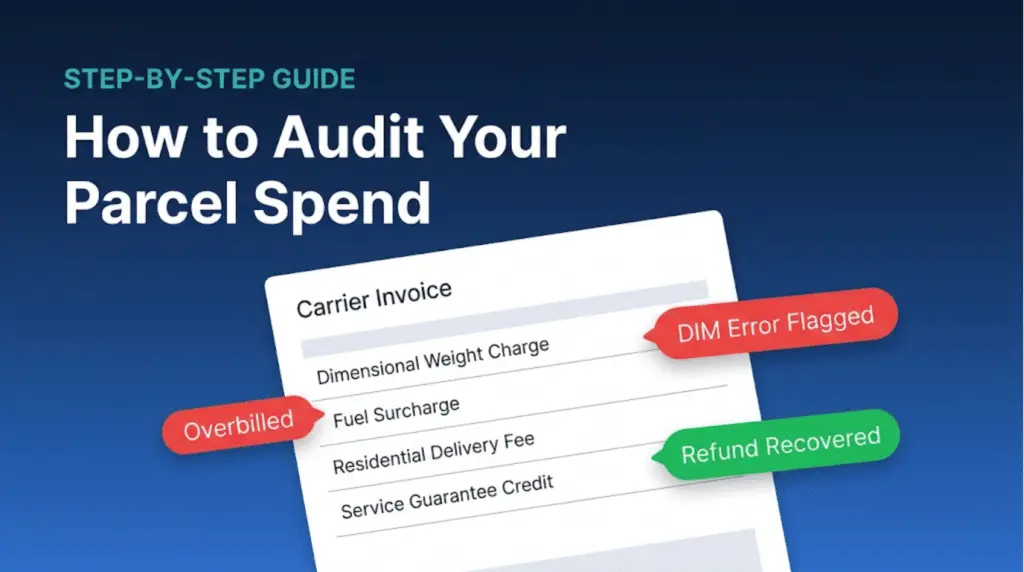
A parcel audit is a systematic review of every carrier invoice line item, checking for billing errors, service guarantee violations, and accessorial fee misapplications that result in overcharges. Industry research consistently finds that automated freight audit platforms achieve approximately 95% invoice accuracy compared to roughly 70% for manual review. For companies spending millions annually with […]
Transportation Spend Management in 2026: A CFO’s Guide
Transportation spend management (TSM) Transportation spend management (TSM) is the systematic process of consolidating freight data across all modes, auditing carrier invoices for billing accuracy, and using verified spend data to negotiate better carrier contracts. For CFOs and finance leaders, it is the difference between a logistics budget that reflects what your company actually […]
TPM 2026 Recap: Key Takeaways for Shippers
TPM 2026 wrapped in Long Beach last week against an extraordinary backdrop. U.S. and Israeli strikes on Iran on February 28 and the resulting closure of the Strait of Hormuz had already reshaped the agenda before the first session opened on March 1. What attendees had planned to discuss gave way to something far more […]
What to Expect at TPM 2026: FreightOptics Preview

TPM 2026 (March 1-4, Long Beach Convention and Entertainment Center) is where annual trans-Pacific ocean freight contracts get negotiated, and shippers who arrive without clean historical data and a surcharge containment strategy will leave with contracts they cannot enforce. The global container ship order book exceeded 11 million TEU by late 2025, with an order-book-to-fleet […]
Manifest 2026 Recap: Key Takeaways

Manifest 2026 took place February 9-11, 2026, at The Venetian Convention and Expo Center in Las Vegas, bringing together Fortune 500 supply chain executives, global shippers, logistics technology founders, and institutional investors. The conference confirmed that technology investment has moved past the pilot stage and surfaced a critical gap in how companies are sequencing that […]
Carrier Contract Red Flags: 2026 Renewals
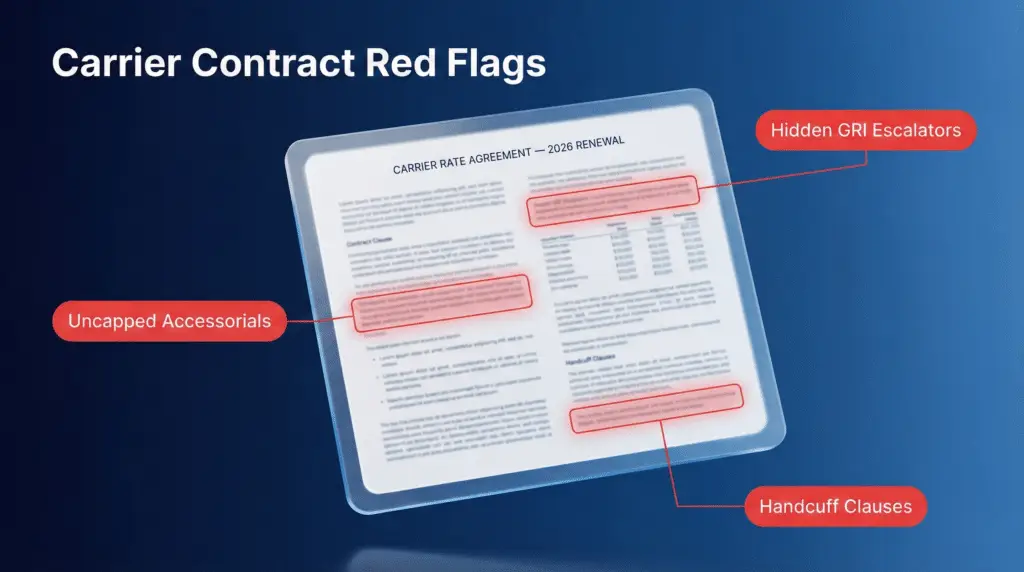
Effective carrier contract negotiation requires leveraging your own invoice data as a strategic weapon before entering the negotiation room. Contract optimization typically reduces shipping costs by 15-30%, but only when shippers close the “Execution Gap” between negotiated rates and actual invoiced amounts. According to industry analysis, accessorial charges now represent 20-35% of total shipping spend, […]
What to Expect at Manifest 2026: FreightOptics Preview
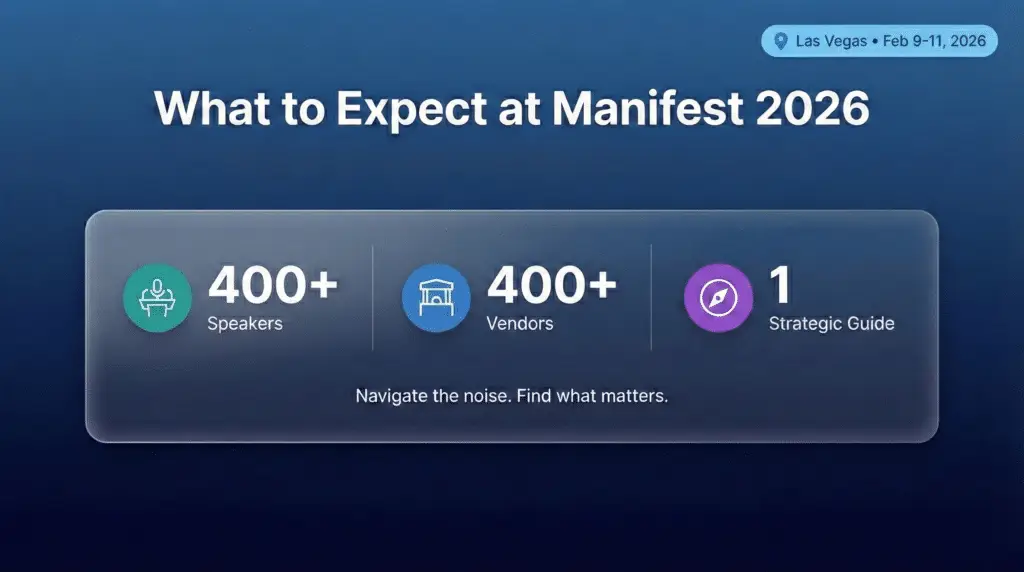
Graphic summary: The Manifest 2026 graphic lists Las Vegas dates of February 9-11, 2026, more than 400 speakers, more than 400 vendors, and one strategic guide designed to help attendees navigate the event. Manifest 2026 brings over 7,200 supply chain professionals to Las Vegas from February 9 to 11. With more than 400 speakers and […]
Freight Billing Errors: 5 Most Expensive Mistakes
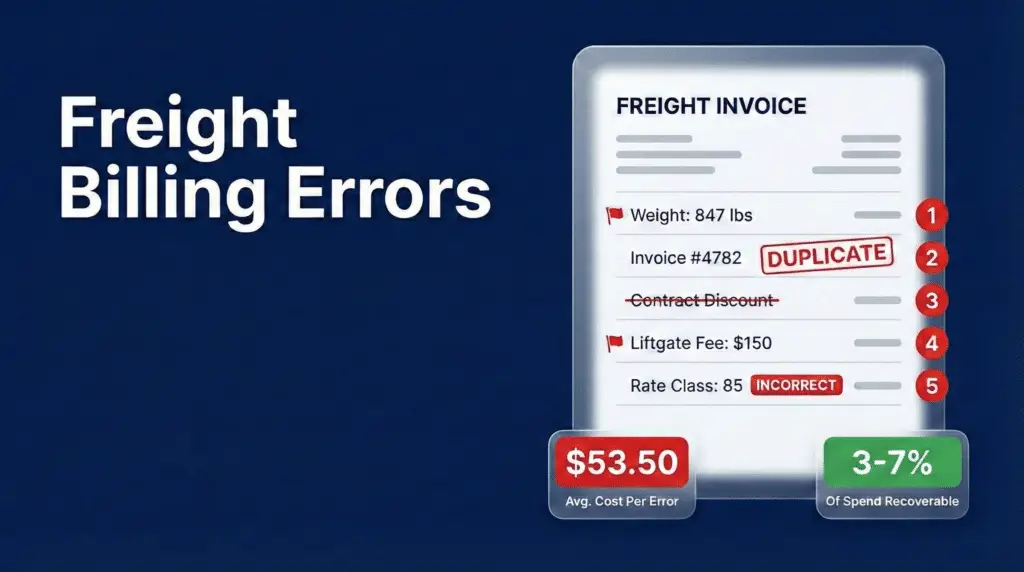
Why do freight billing errors happen? Freight billing errors cost mid-market shippers 3% to 7% of total freight spend annually. According to Ardent Partners’ 2025 State of ePayables report, 22% of all invoices contain exceptions requiring manual intervention. The most common freight billing errors include incorrect weight or dimensional charges, duplicate invoices, missing discount codes, […]
Manufacturing Freight Audit: 5 Hidden Costs

Manufacturers face five categories of hidden freight costs that generic audit programs miss entirely. These costs span invoice errors, inbound vendor markups, detention charges caused by plant operations, inaccurate freight allocation to products, and trapped working capital in payment cycles. Manufacturing accounts payable departments processing freight invoices manually experience error rates between 12% and 15%, […]