





Finance and logistics teams use FreightOptics to validate carrier invoices, surface discrepancies, and keep the evidence behind each audit decision in one controlled workflow.
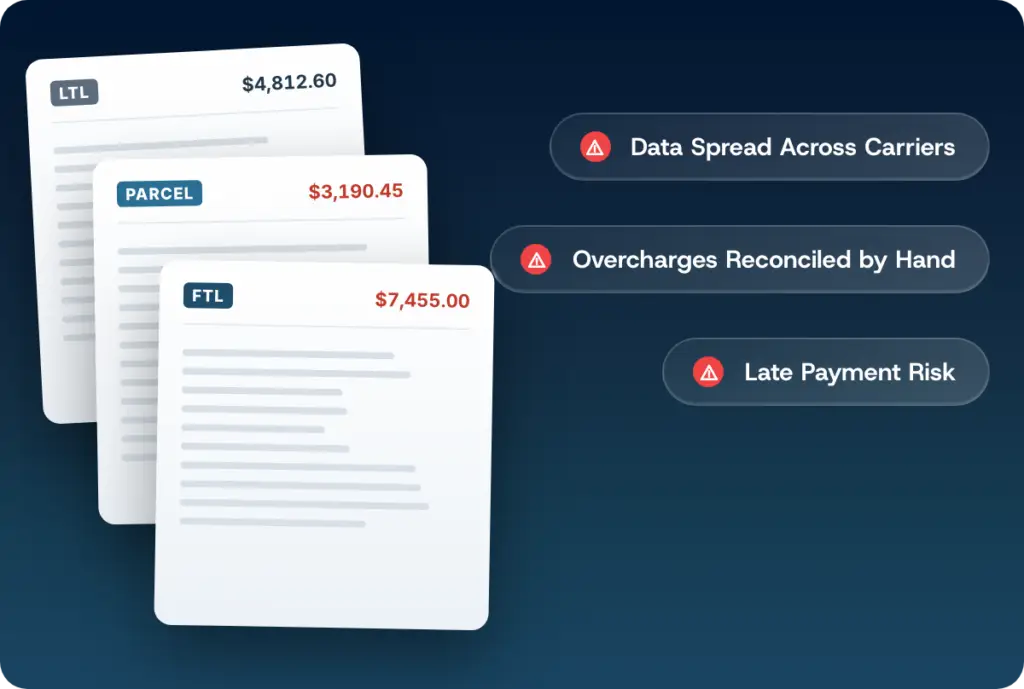
Manual freight invoice review creates delays, reconciliation work, and unreliable accruals. When invoice detail sits across carrier files and spreadsheets, teams miss errors and overspend.

When invoice data is fragmented, finance teams struggle to forecast accurately, compare carrier performance, or assess costs across modes.

Overcharges, duplicate invoices, and misapplied accessorial fees inflate costs and demand extensive manual reconciliation.

High-touch processing and approval cycles increase administrative overhead and late payment risk.

Review incoming invoices from one consistent record. FreightOptics organizes carrier, shipment, account, and billing details.

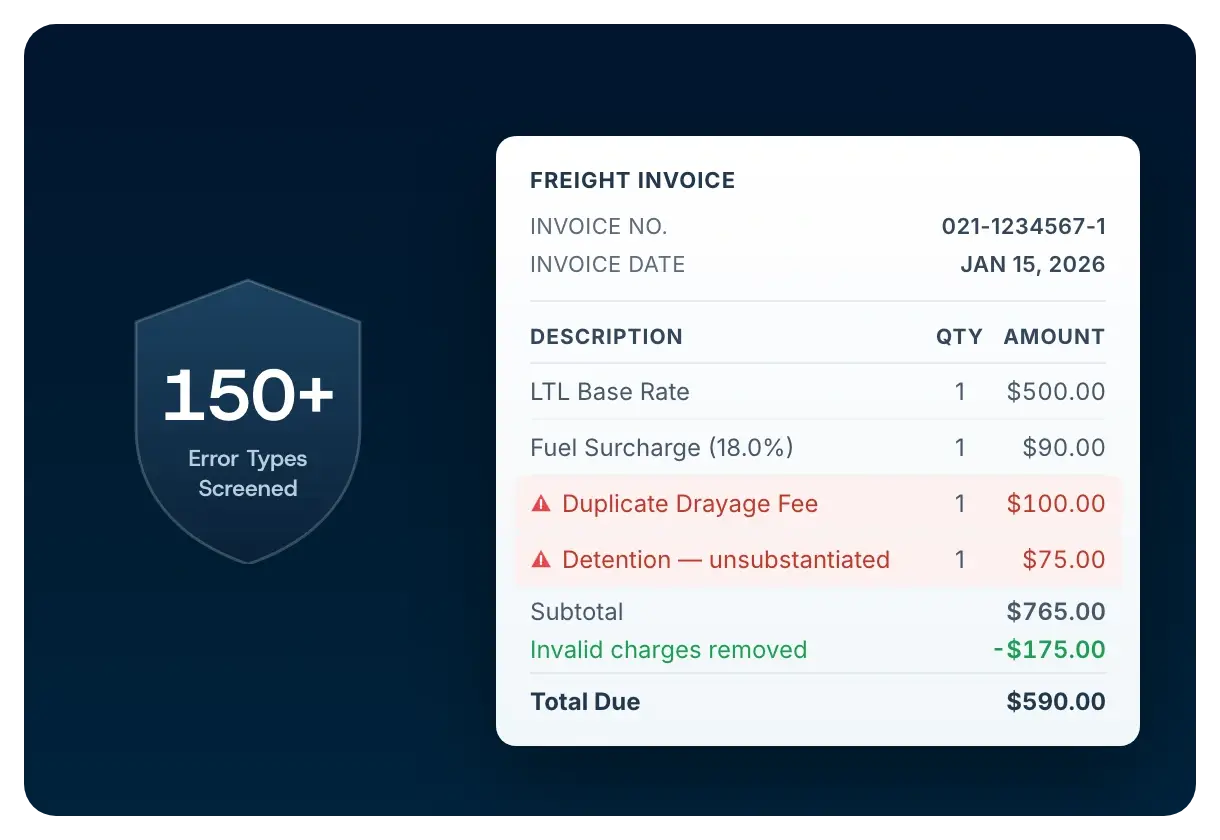
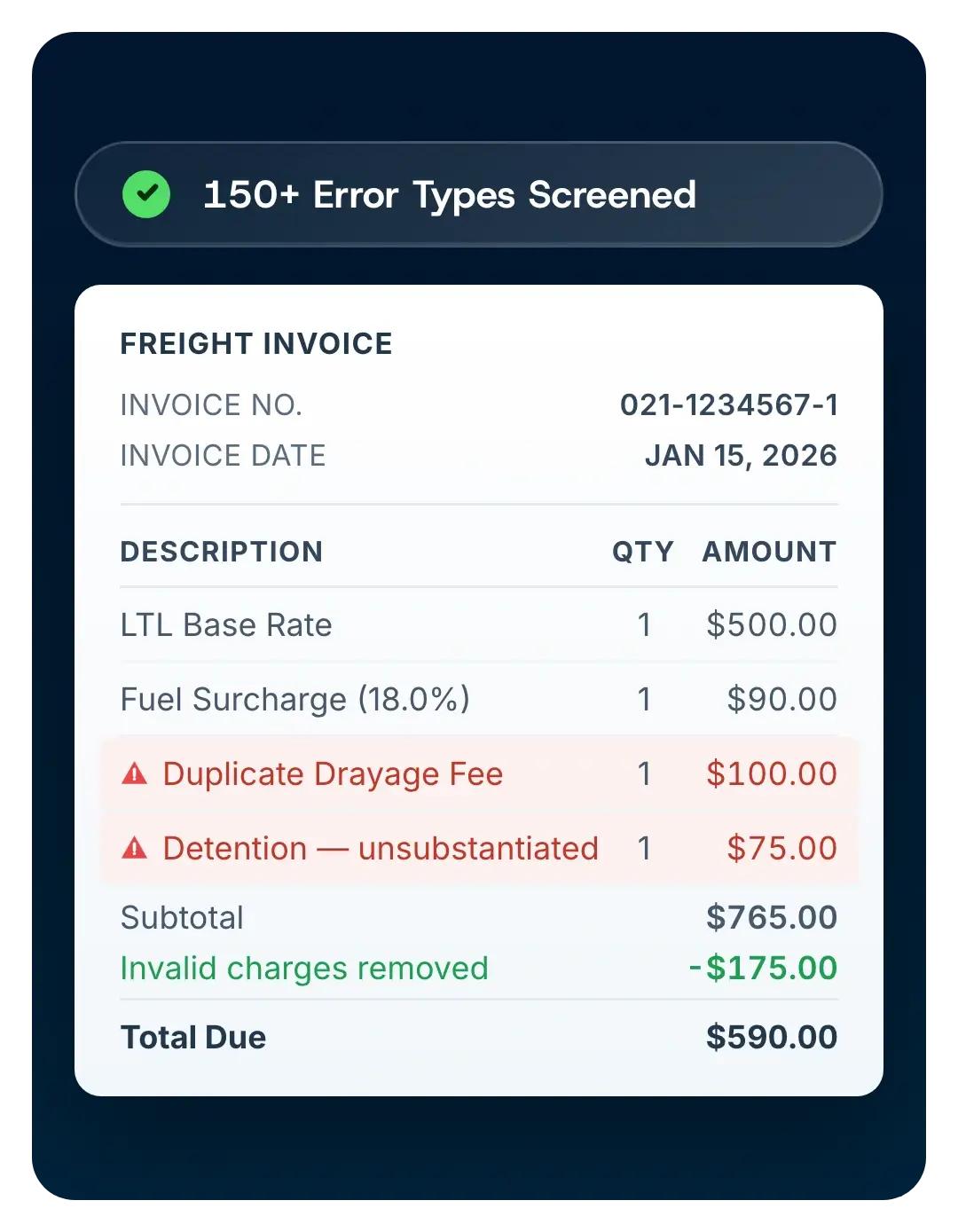
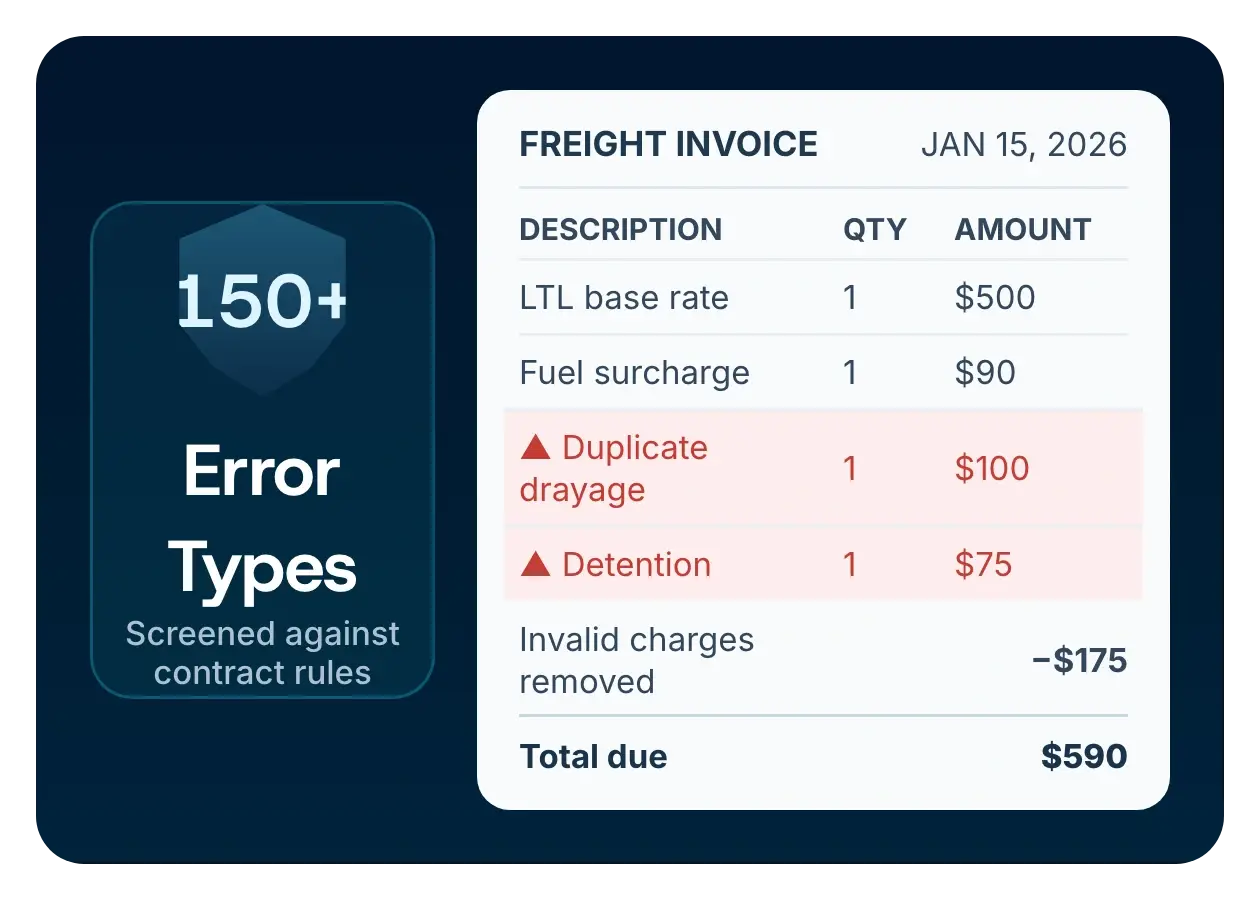
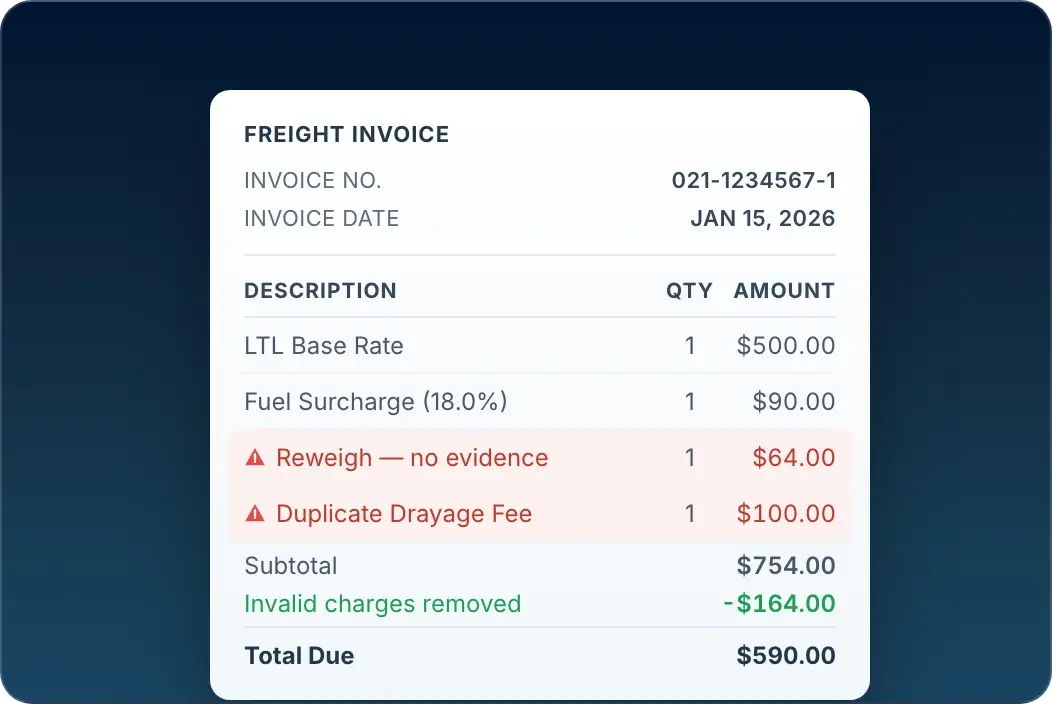
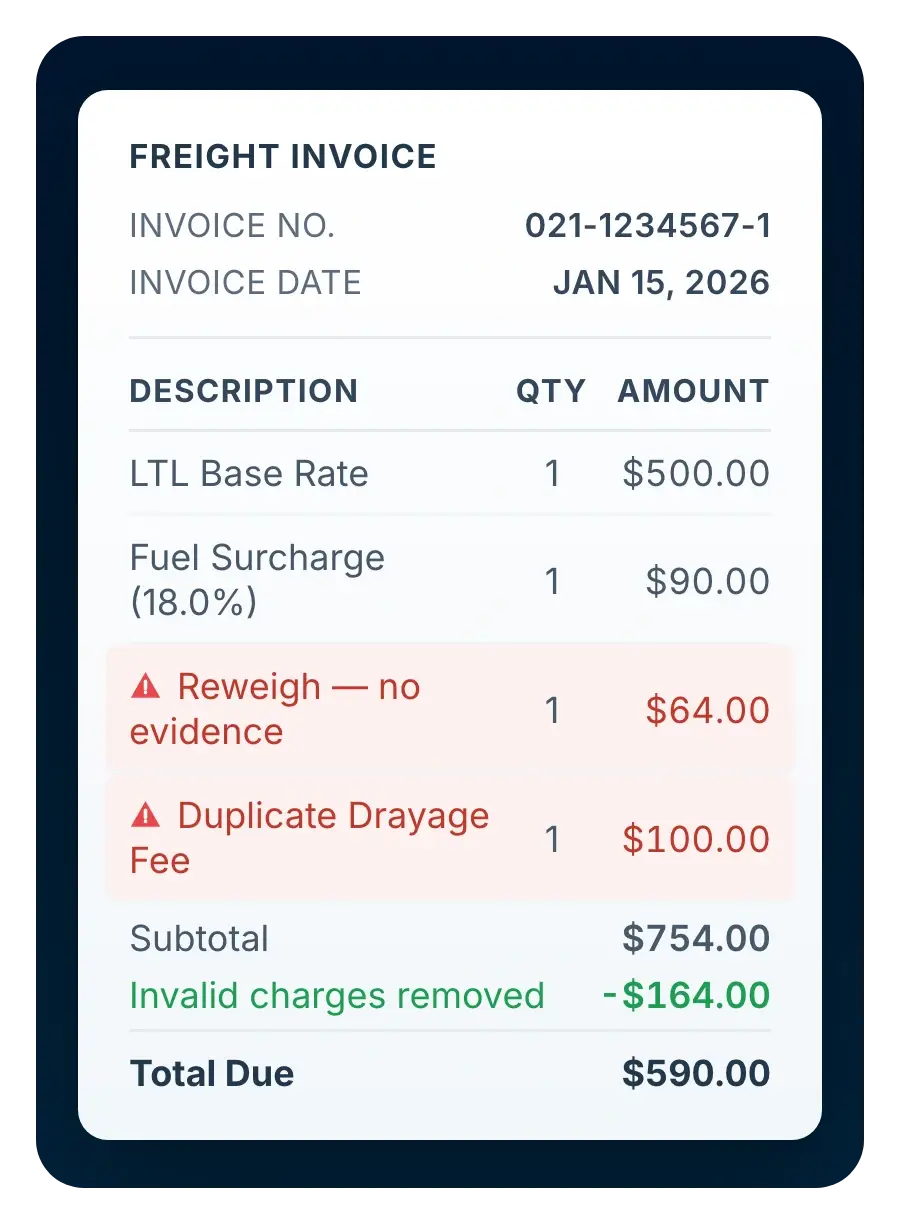
Catch errors before payment. FreightOptics checks each charge against your contract and flags more than 150 potential error types.

See flagged charges by issue type and prioritize the exceptions that need investigation.

Keep finance and logistics aligned on each finding, its supporting detail, owner, and resolution status.
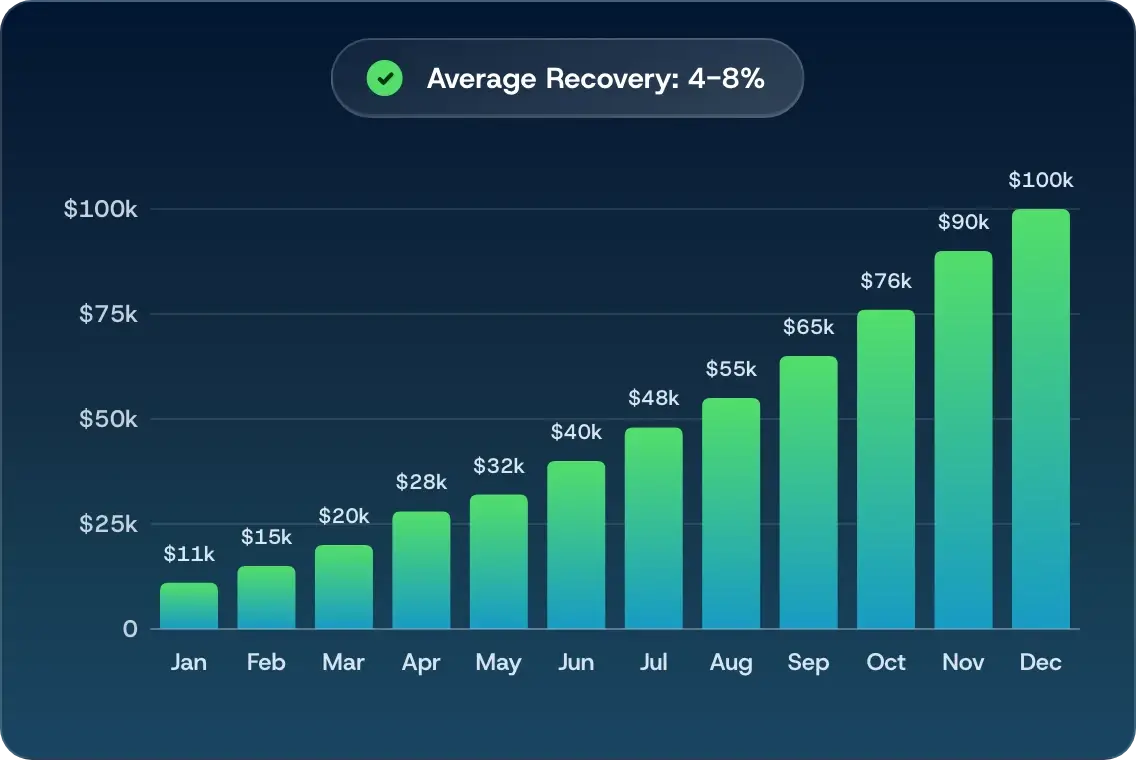
FreightOptics tests each invoice against rates, accessorials, service commitments, and contract rules, so your team can document recoverable errors that basic rate checks miss.

FreightOptics organizes invoice, lane, and performance data inside the platform, so your team compares rates, models contract changes, and enters carrier discussions with a clearer cost baseline.
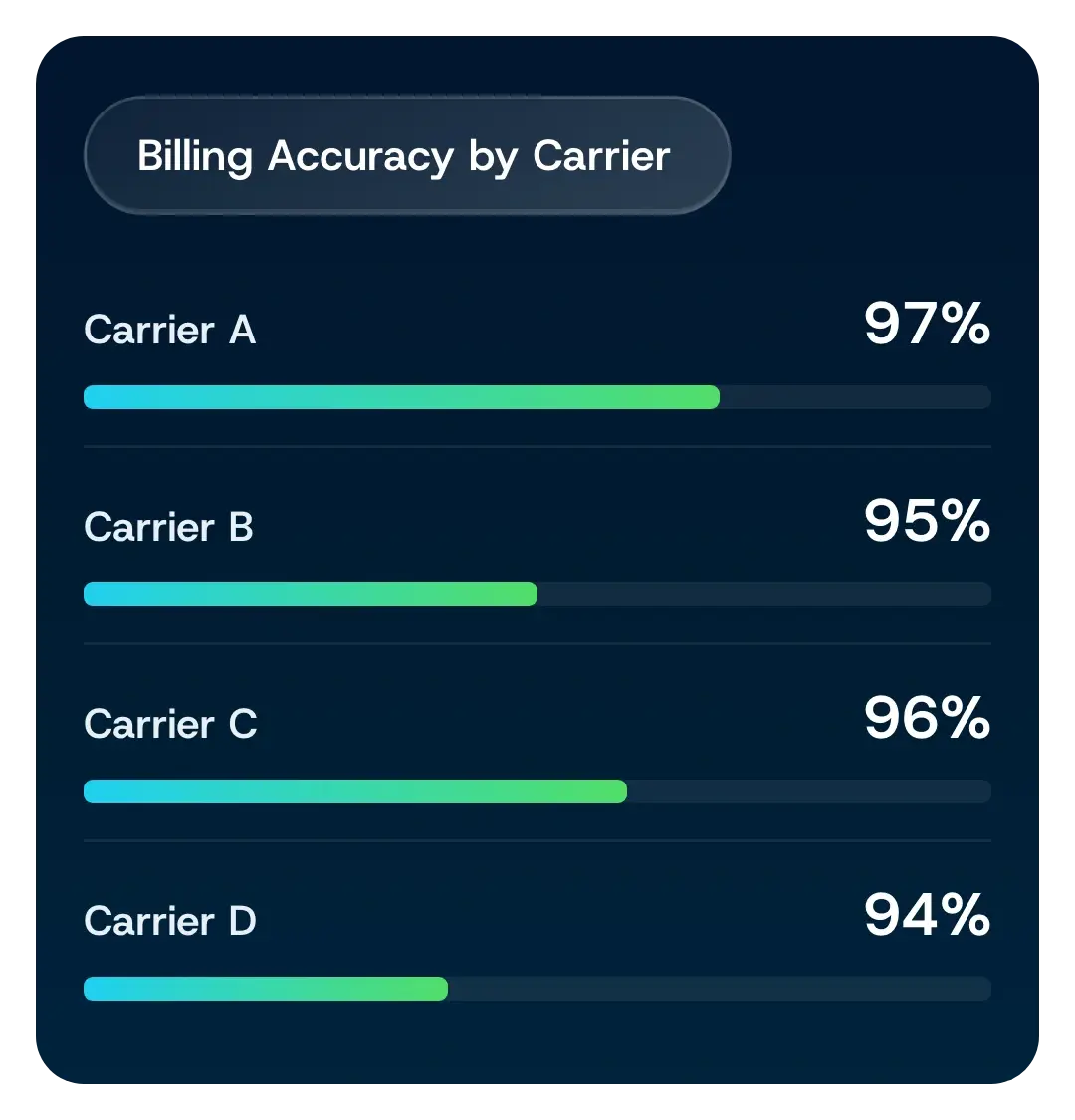
FreightOptics organizes invoice, lane, and performance data inside the platform, so your team compares rates, models contract changes, and enters carrier discussions with a clearer cost baseline.
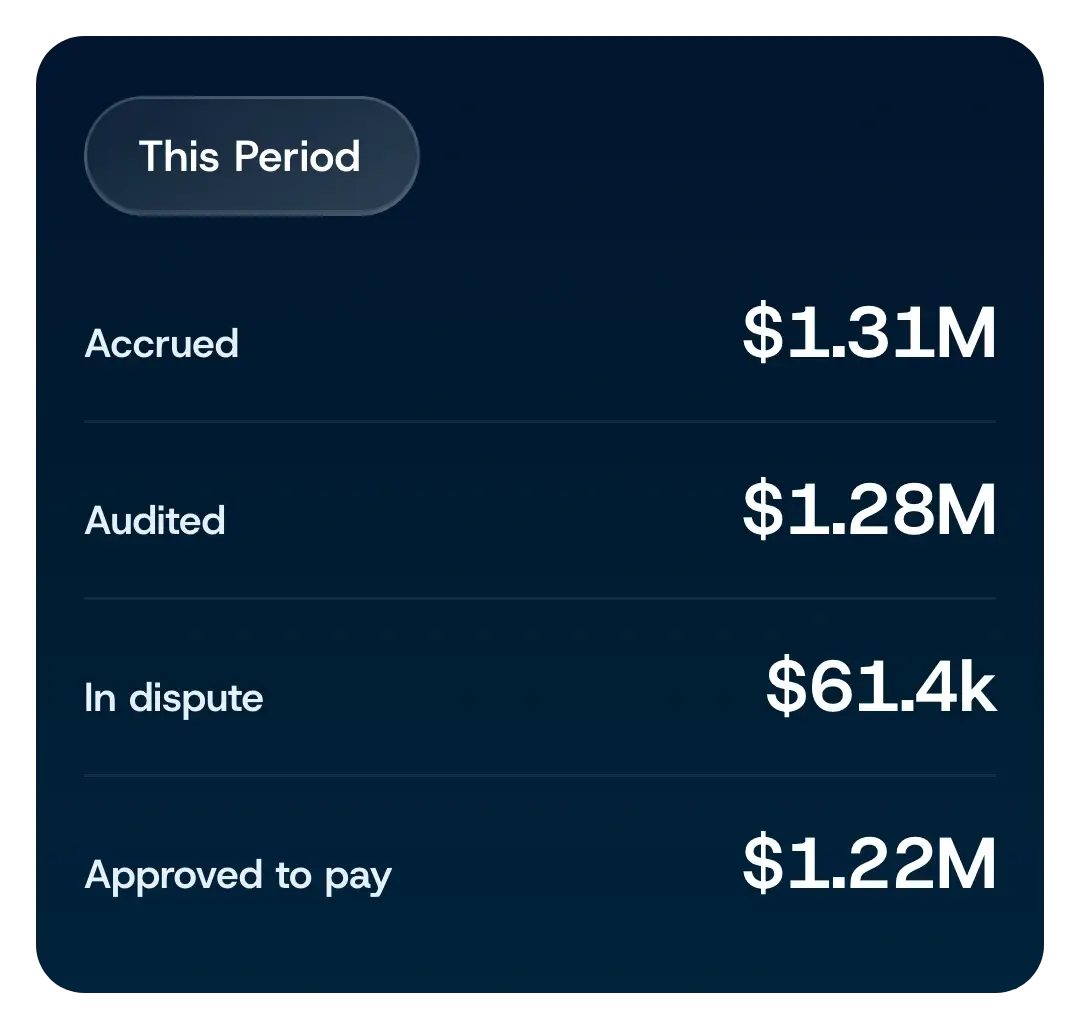
Use real-time transportation accrual and spend data to improve financial planning, investigate variances, and reduce end-of-quarter surprises.
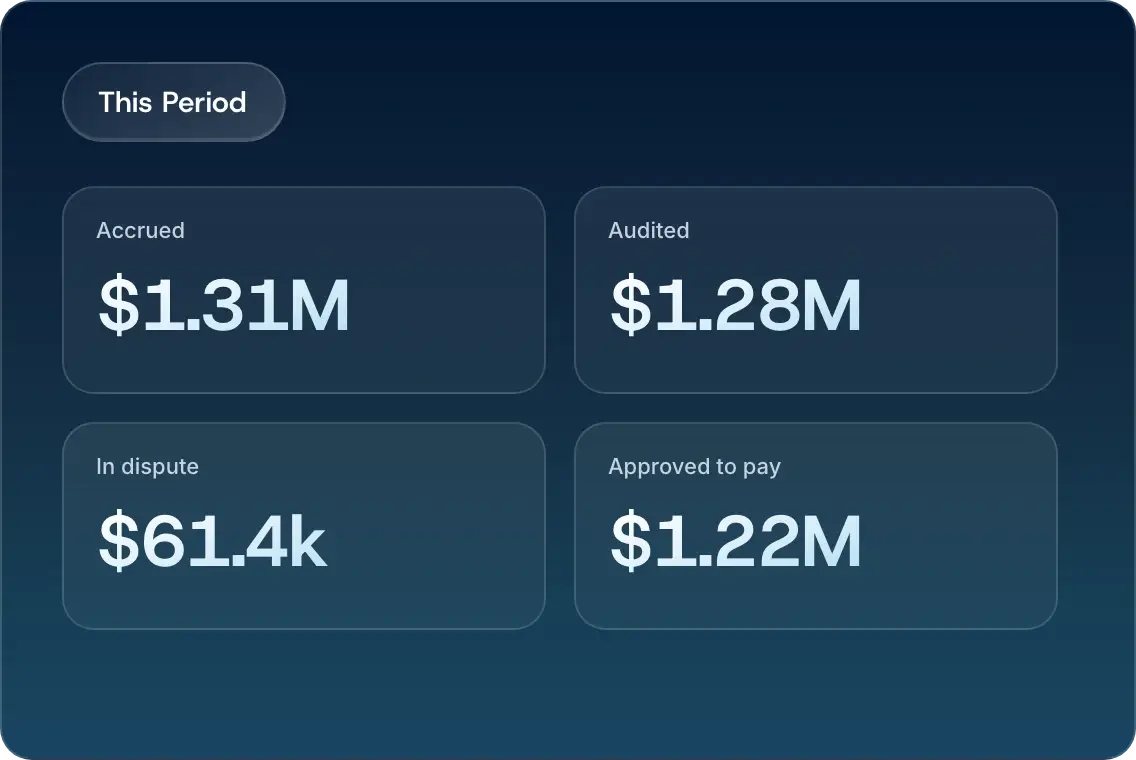
Use real-time transportation accrual and spend data to improve financial planning, investigate variances, and reduce end-of-quarter surprises.
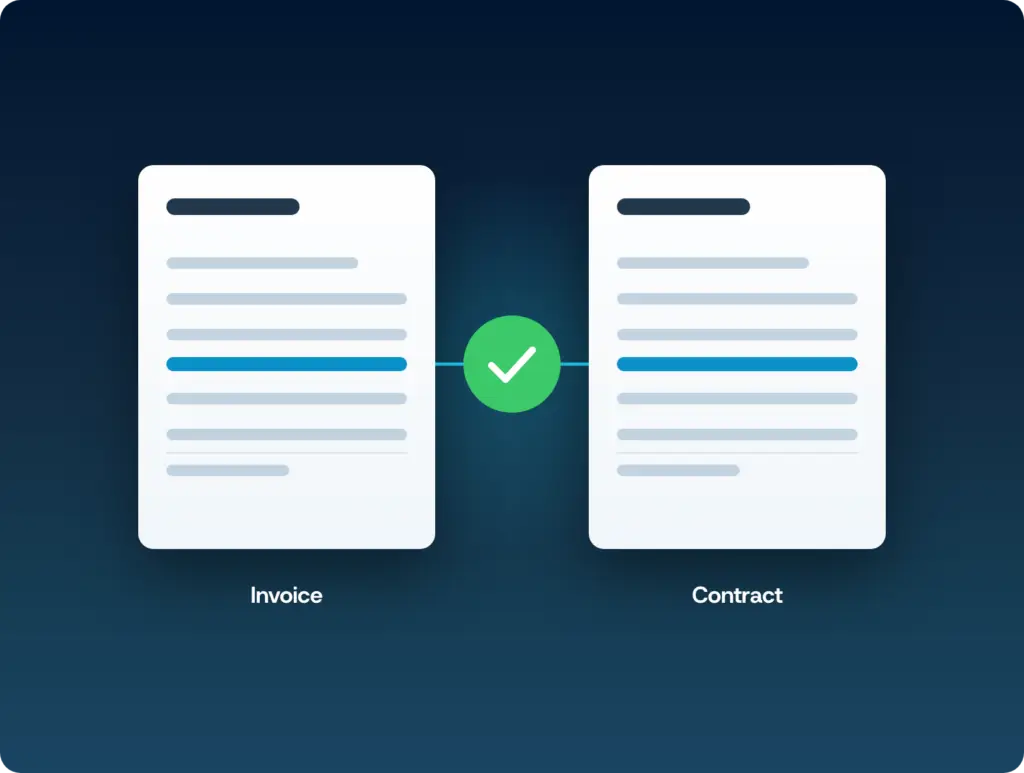
FreightOptics applies configurable audit logic to invoices before and after payment, using AI to surface anomalies so finance and logistics teams can review the invoice, contract, or lane behind a charge.
FreightOptics checks fuel, residential, liftgate, and other accessorial charges against the applicable contract rules and flags incorrect or misapplied fees for review.
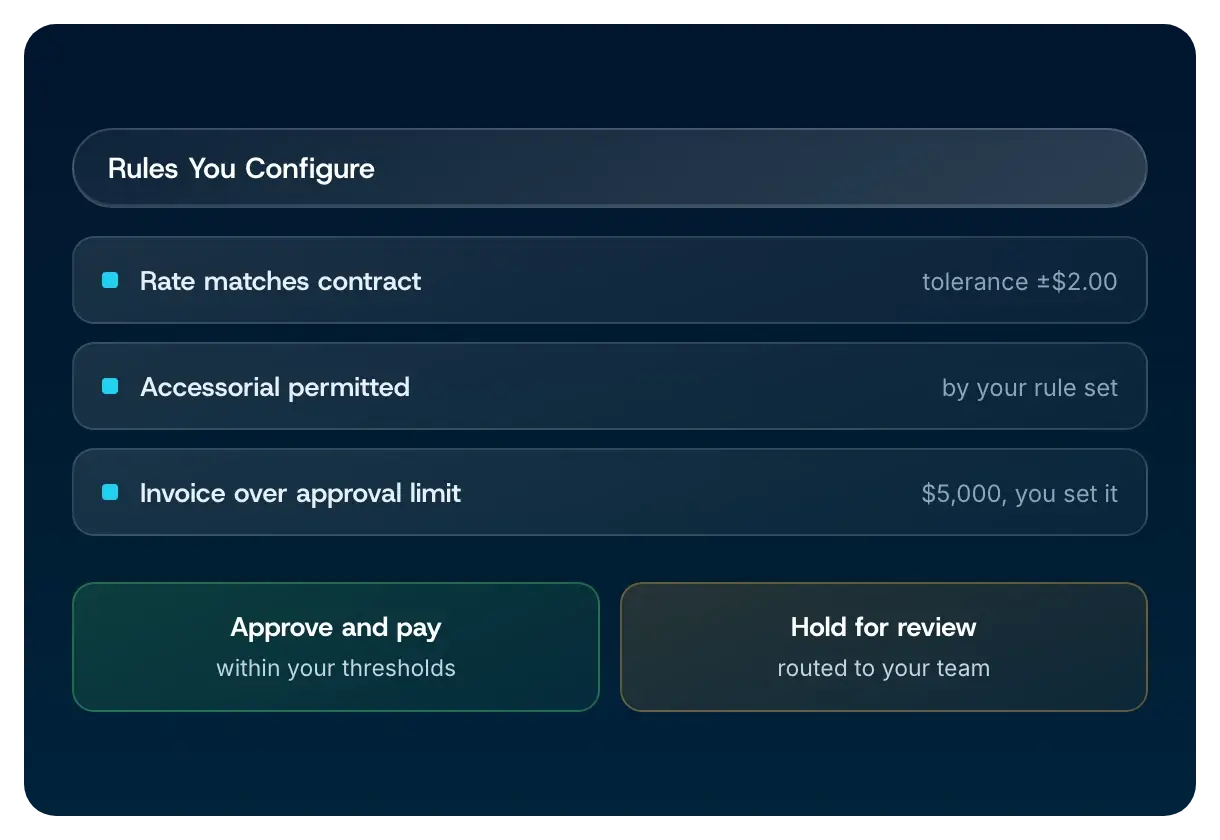
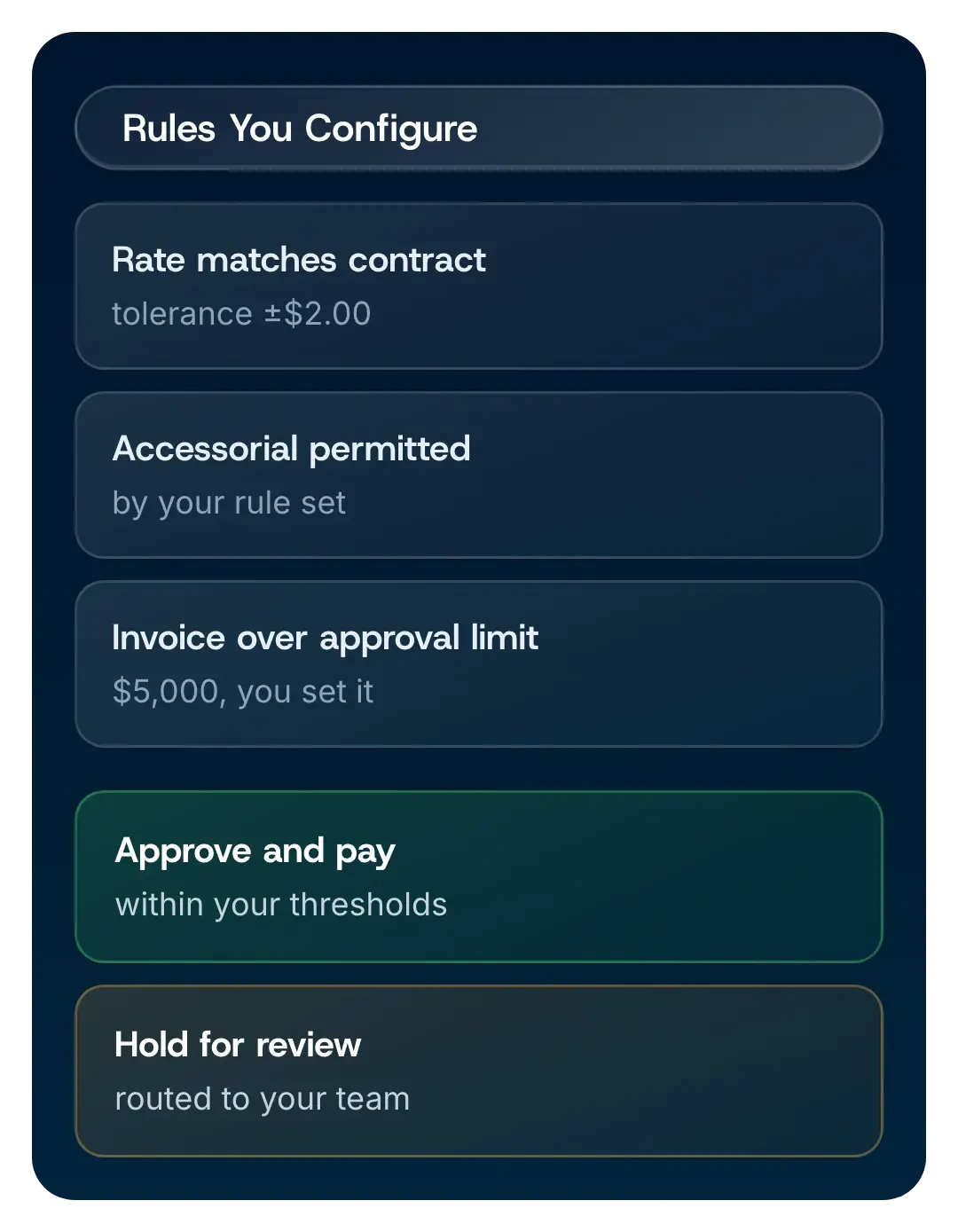
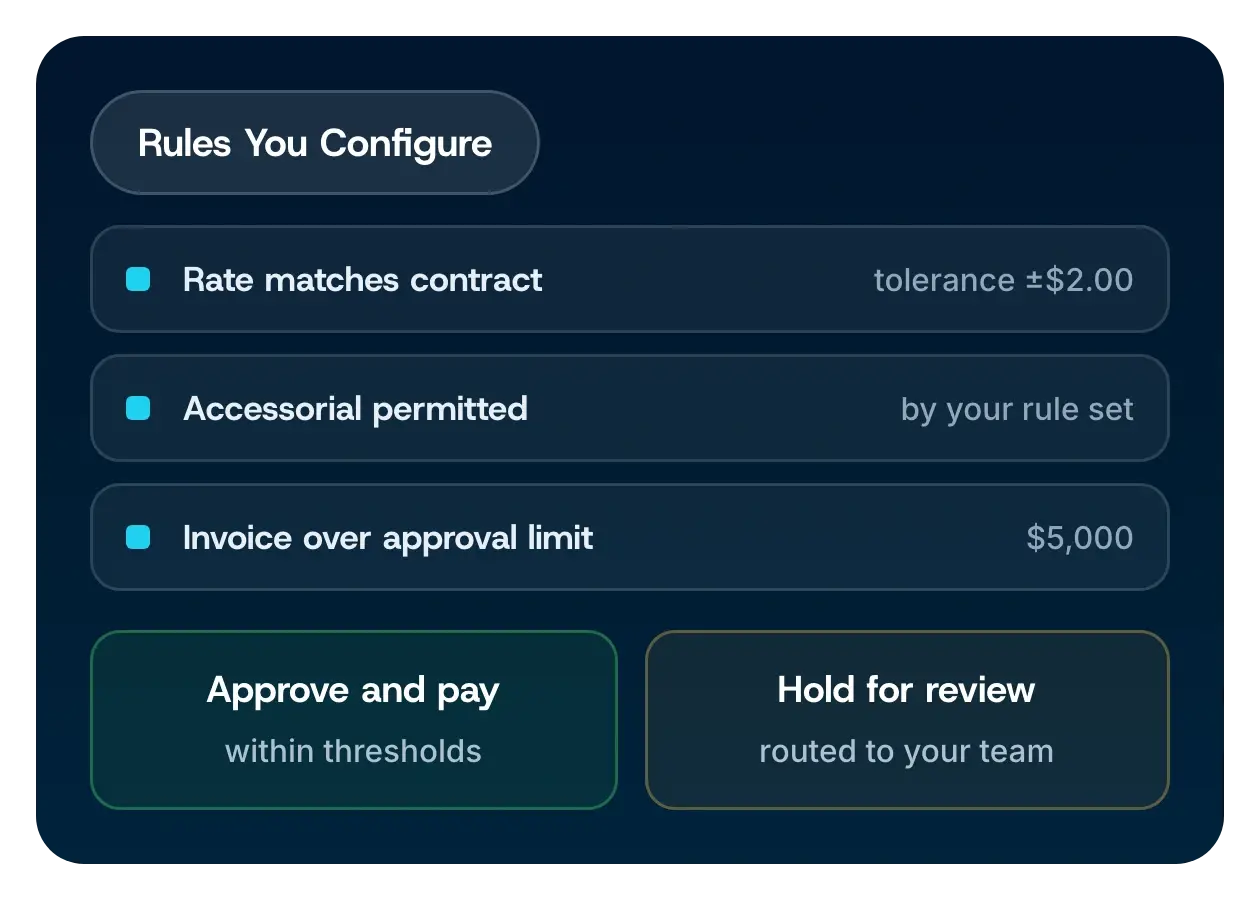
Configure the audit rules and approval thresholds that match how your finance and logistics teams work, so FreightOptics validates invoices against your logic, not a generic template.
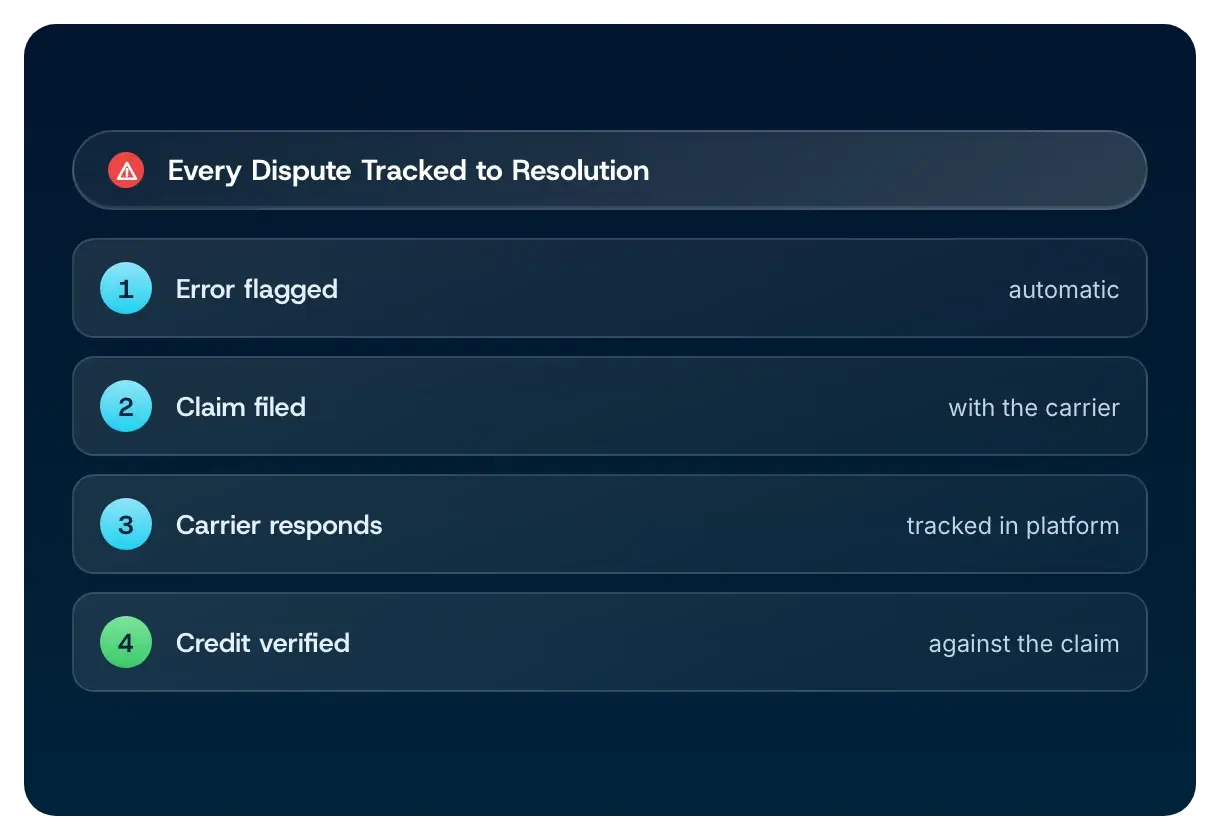
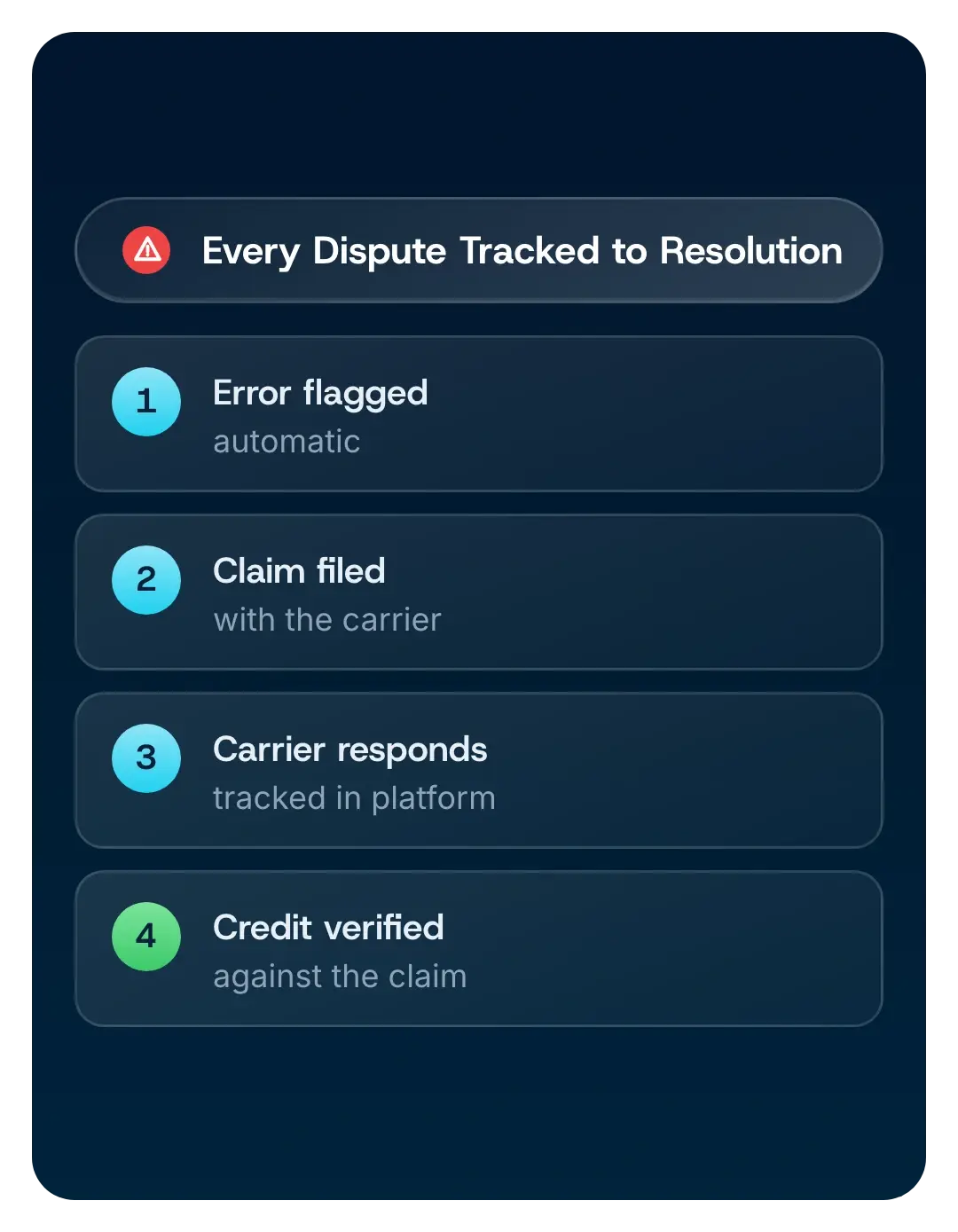
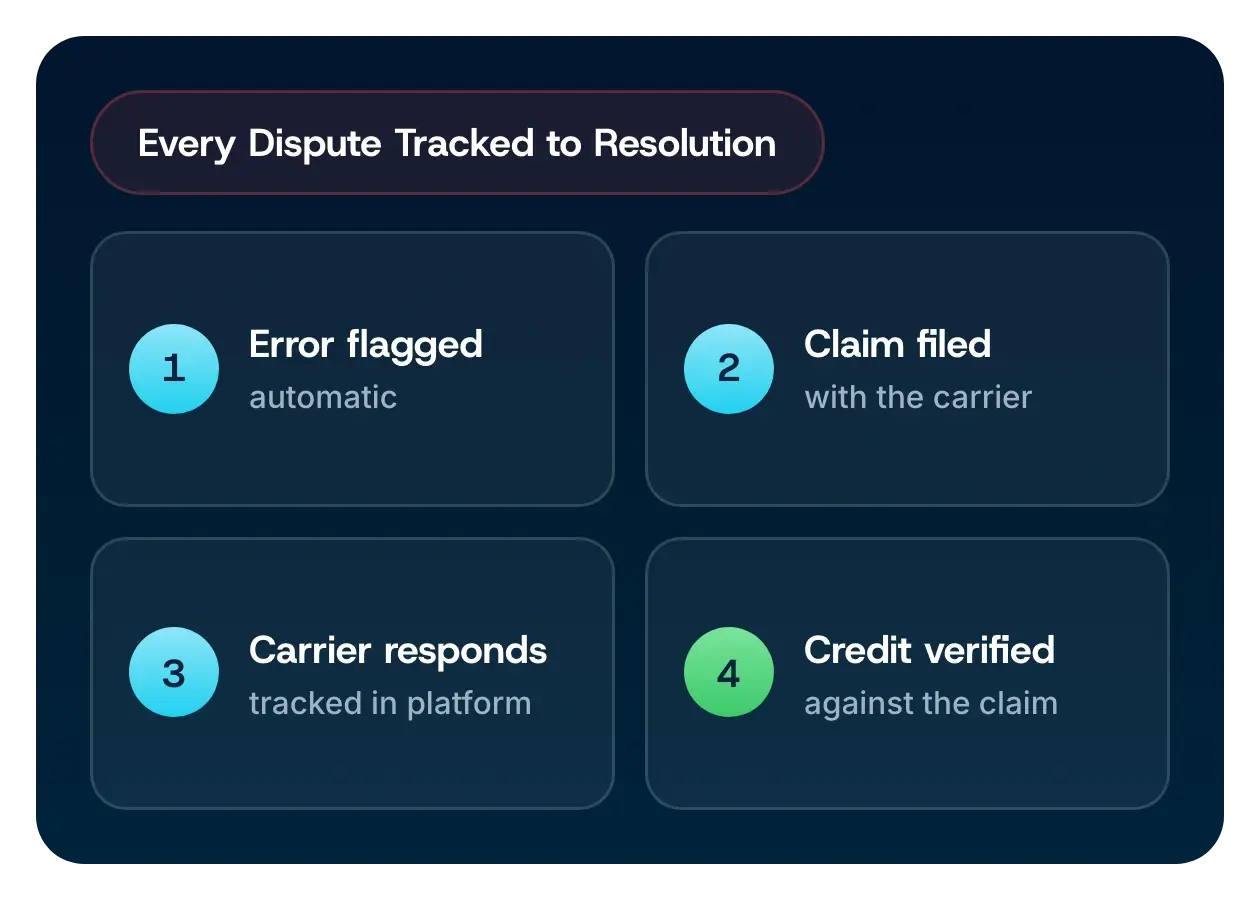
Flagged errors create a documented exception inside the platform. When managed recovery applies, FreightOptics specialists handle eligible filing, carrier follow-up, and credit verification while your team tracks status.
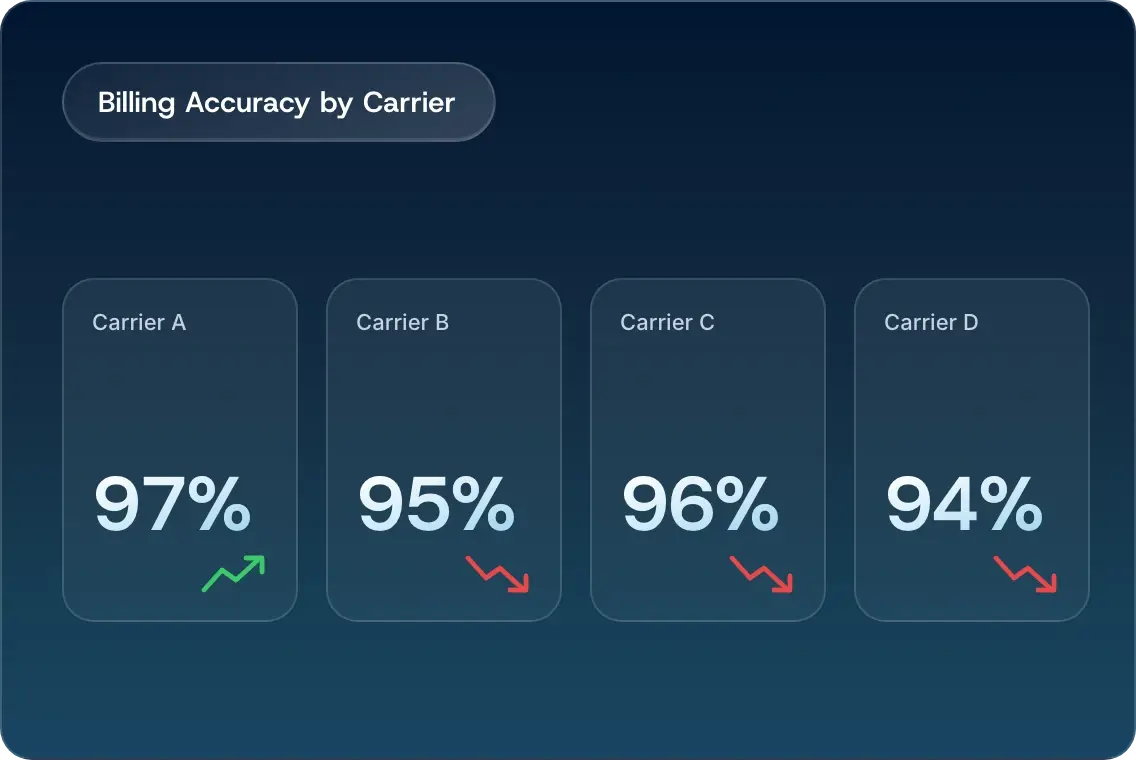
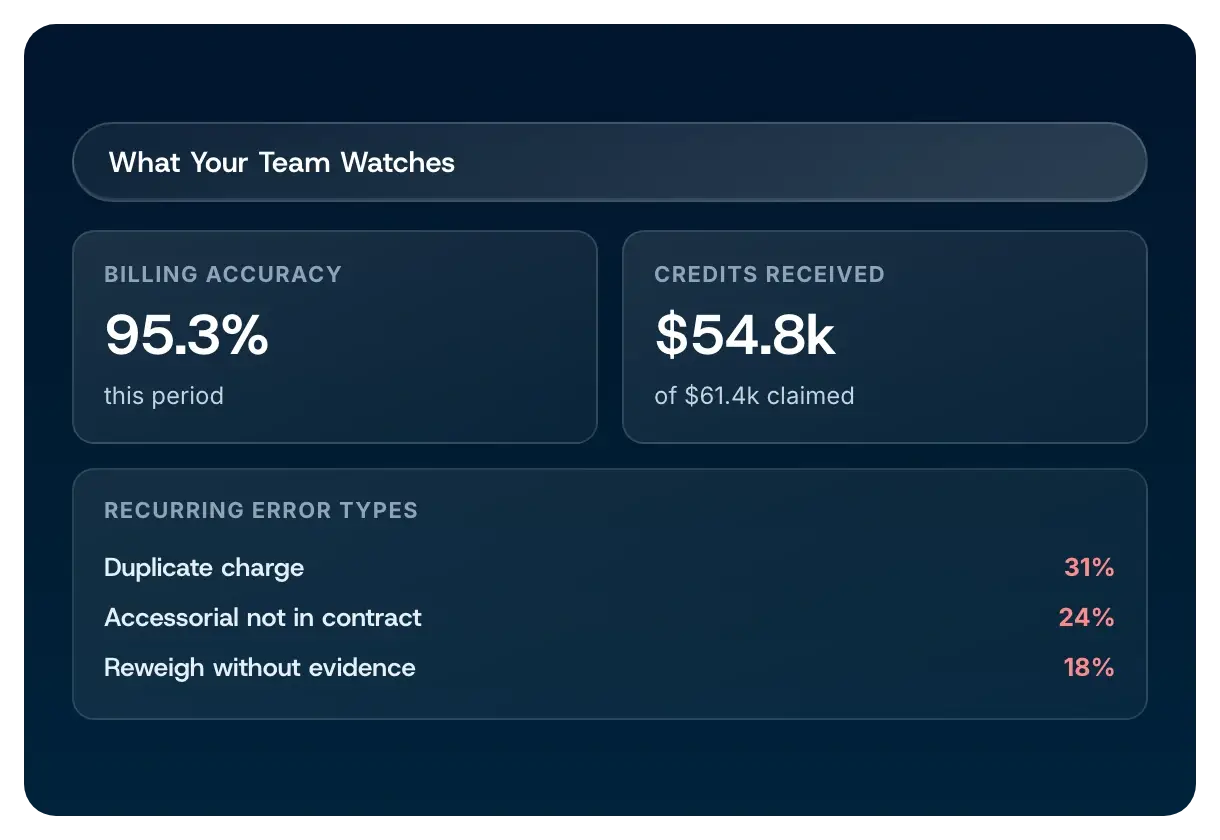
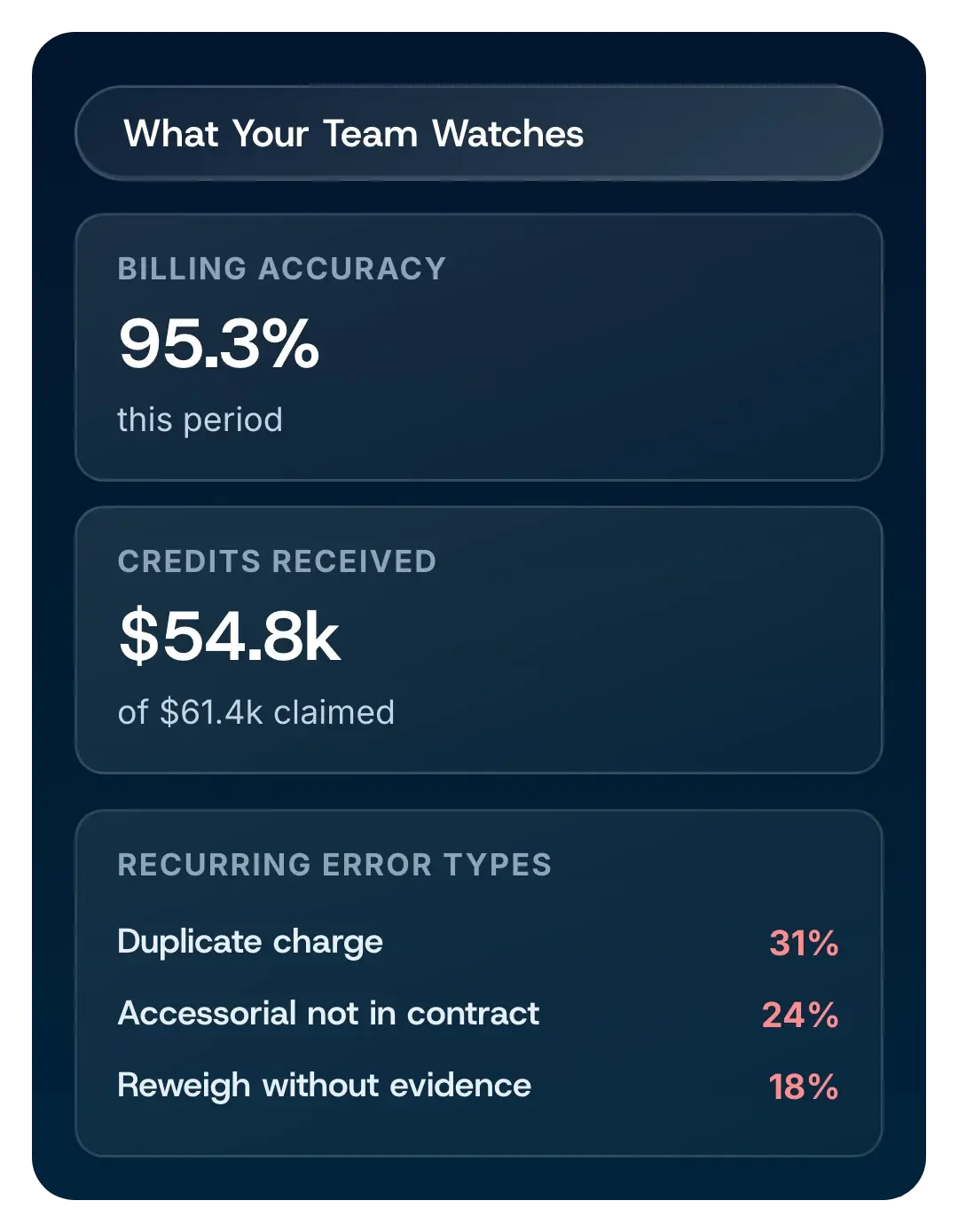
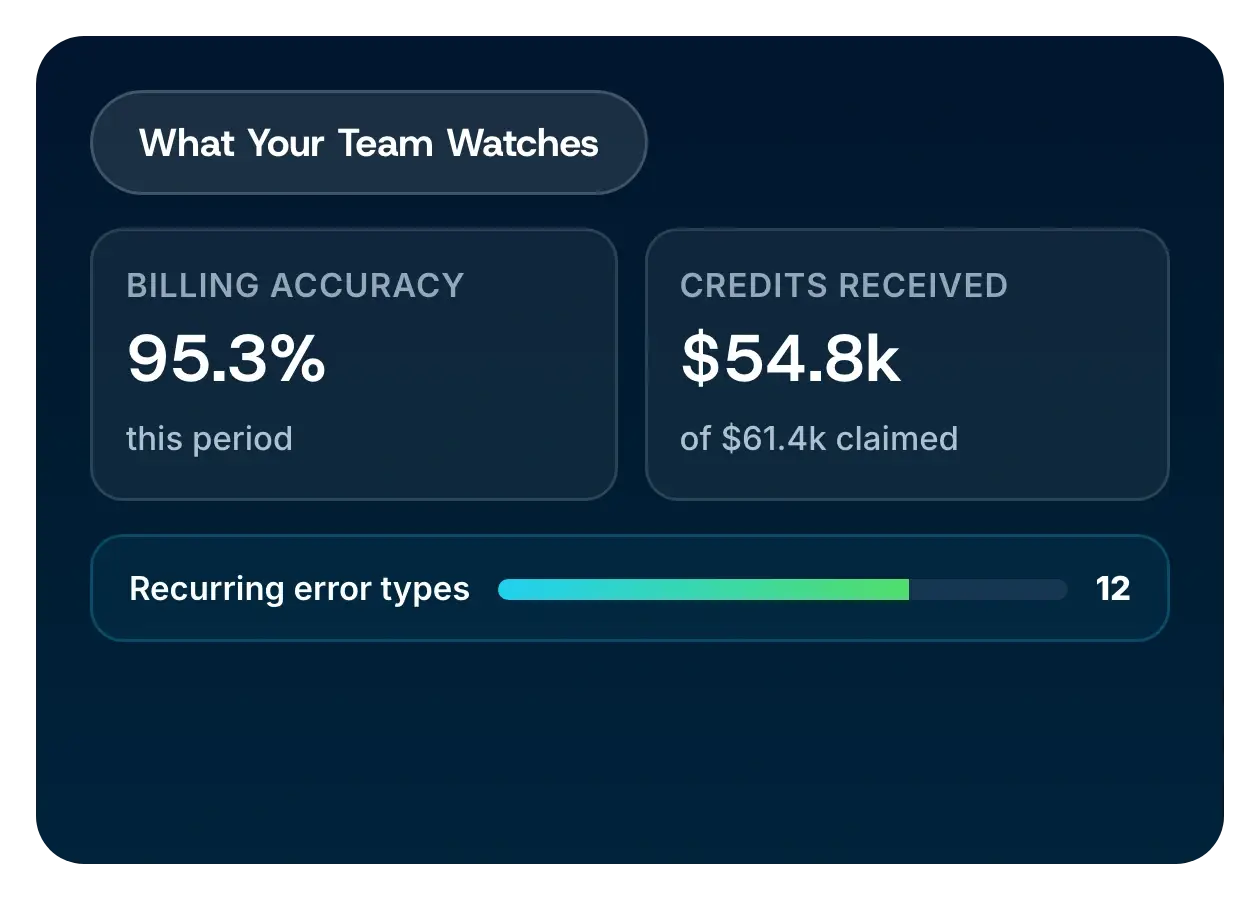
Track billing accuracy, credit status, and recurring error trends through customizable dashboards your team configures and controls.
FreightOptics connects carrier invoice and transportation data through methods your team supports. Implementation typically takes 4 to 6 weeks, depending on carrier and system access.
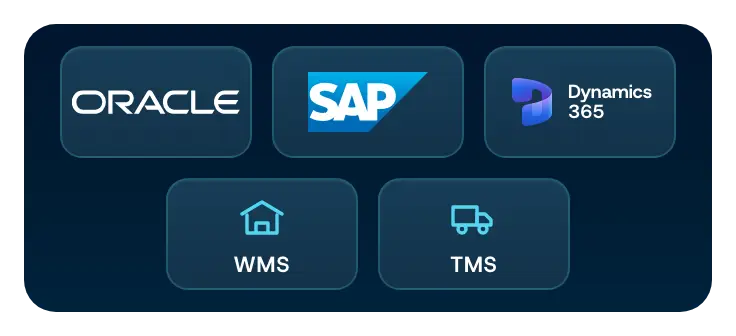
FreightOptics connects with your core business systems, from major ERPs like Oracle, SAP, and Manhattan to your WMS, TMS, and order management platforms.
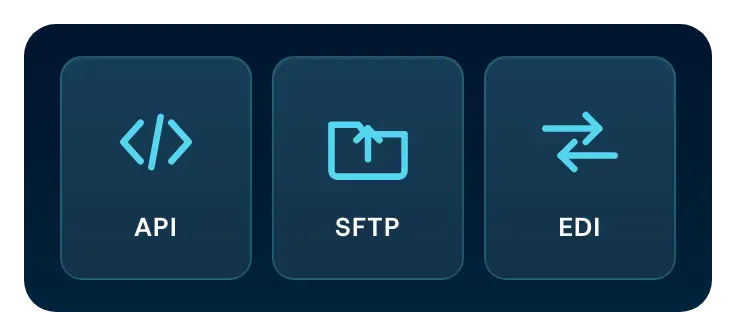
The platform supports API, EDI, and SFTP so transportation data can move through standard connection methods.
FreightOptics protects your data on a SOC 2 Type II certified and GDPR compliant platform.

FreightOptics links to your carriers and core systems through API, EDI, or SFTP, so invoice and shipment data flows into a single audit record.

Configure the rates, contract terms, and approval rules FreightOptics checks each invoice against, matching how your team works.

FreightOptics validates incoming invoices against your logic, flags exceptions before and after payment, and routes each finding into a structured review queue with supporting detail.

Your team investigates exceptions, generates claims inside the platform, and tracks status and recurring patterns through analytics dashboards.
Invoices land in a single audit record with shipment and contract detail attached.
Invoices sit across inboxes, files, and spreadsheets, gathered by hand.
Imports invoices, but shipment and contract context often stays elsewhere.
Configurable, contract-aware logic your team sets to its own rates and terms.
Rules live in a reviewer’s head or a fragile formula.
Standard rule sets, hard to tailor to specific contracts.
Flags exceptions automatically during pre-payment and post-payment audit.
Errors surface only when someone checks the math by hand.
Catches common errors. Depth depends on configuration.
Groups discrepancies by type into a structured queue your team can prioritize.
Tracked in ad hoc tabs with no shared status.
Lists exceptions, often without shipment or contract context.
Generates claims inside the platform and tracks each dispute through to credit confirmation.
Claims and credits tracked in email threads and logs.
Dispute tracking varies. Claim status often lives outside the tool.
Connects to ERP, TMS, WMS, and order systems through API, EDI, and SFTP.
Data is copied and re-keyed between systems by hand.
Integrations often limited to a few carriers or formats.
Customizable dashboards your team configures to watch accuracy, credits, and error trends.
New questions often mean rebuilding a pivot table.
Reporting is narrow to the tool’s own audit scope.
Recurring billing patterns stay visible across invoices, carriers, and lanes.
Easy to miss when each invoice is reviewed alone.
Trends are limited to what a single point tool captures.
Keeps invoice and audit records within the platform’s security controls.
Sensitive invoice data spreads across local files and personal inboxes.
Security protections vary by vendor and deployment.
Invoices land in a single audit record with shipment and contract detail attached.
Invoices sit across inboxes, files, and spreadsheets, gathered by hand.
Imports invoices, but shipment and contract context often stays elsewhere.
Configurable, contract-aware logic your team sets to its own rates and terms.
Rules live in a reviewer’s head or a fragile formula.
Standard rule sets, hard to tailor to specific contracts.
Flags exceptions automatically during pre-payment and post-payment audit.
Errors surface only when someone checks the math by hand.
Catches common errors. Depth depends on configuration.
Groups discrepancies by type into a structured queue your team can prioritize.
Tracked in ad hoc tabs with no shared status.
Lists exceptions, often without shipment or contract context.
Generates claims inside the platform and tracks each dispute through to credit confirmation.
Claims and credits tracked in email threads and logs.
Dispute tracking varies. Claim status often lives outside the tool.
Connects to ERP, TMS, WMS, and order systems through API, EDI, and SFTP.
Data is copied and re-keyed between systems by hand.
Integrations often limited to a few carriers or formats.
Customizable dashboards your team configures to watch accuracy, credits, and error trends.
New questions often mean rebuilding a pivot table.
Reporting is narrow to the tool’s own audit scope.
Recurring billing patterns stay visible across invoices, carriers, and lanes.
Easy to miss when each invoice is reviewed alone.
Trends are limited to what a single point tool captures.
Keeps invoice and audit records within the platform’s security controls.
Sensitive invoice data spreads across local files and personal inboxes.
Security protections vary by vendor and deployment.
Freight audit software checks carrier invoices against contract terms, surfaces the charges that do not match, and keeps the supporting detail connected. It gives finance and logistics teams a defensible record of freight cost and a faster way to investigate exceptions.
Manual review depends on someone remembering each contract rule and checking the math by hand. FreightOptics applies configurable audit logic before payment and again after payment, keeps supporting detail beside each finding, and gives your team a consistent exception record.
Freight audits commonly identify the following errors.
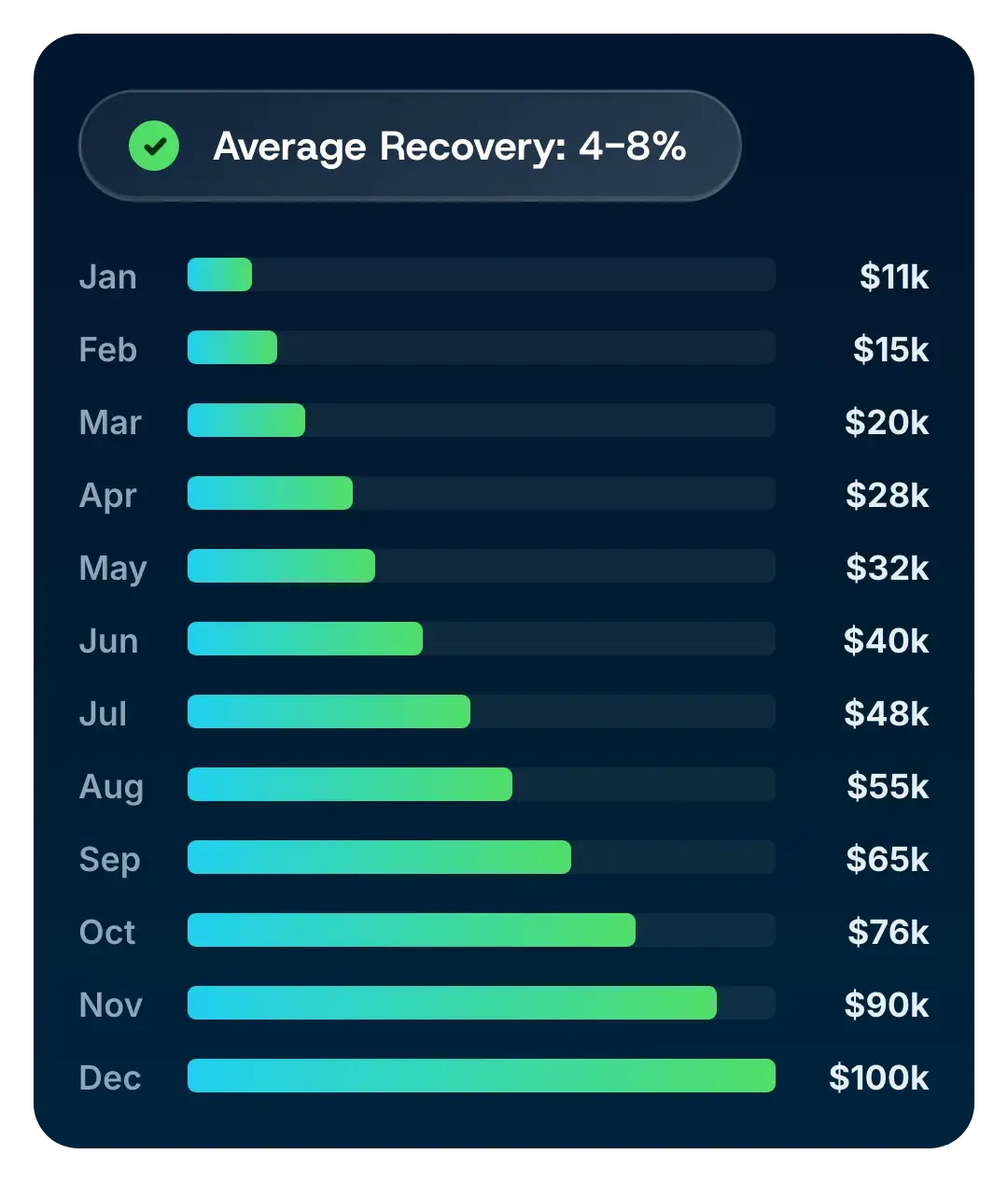
Correcting these discrepancies can recover 4-8% of annual freight spend.
FreightOptics audits parcel, LTL, truckload, ocean, and air freight invoices so teams can review carrier billing across modes in one workflow.
Yes. Pre-payment audits catch incorrect charges before payment, while post-payment audits identify recoverable errors that were missed earlier.
Yes. Your team sets the rates, contract terms, approval thresholds, and audit rules FreightOptics checks each invoice against, so the audit reflects your contracts rather than a generic template.
FreightOptics tracks contract compliance, accessorial patterns, lane costs, and carrier performance across invoices. Your team can use those trends to prioritize carrier discussions, routing changes, and process corrections.
Freight Audit keeps the audit inside your team’s control. If you would rather hand off exception handling, recovery, and carrier payment, FreightOptics offers that as a managed service through Freight Audit and Payment.
Yes. FreightOptics connects with major ERP and TMS platforms, including Oracle, SAP, and Manhattan, as well as WMS and order management systems. That keeps freight data moving through the workflows your team already uses.
FreightOptics supports API, EDI, and SFTP connections for carrier, transportation, and financial data.
Yes. The FreightOptics platform is SOC 2 Type II certified and GDPR compliant.
Tell us which freight charges are hardest to explain or control. We’ll talk through what you’re seeing and whether an audit can help.
More than $1.7 billion in verified savings over 23 years.
Prefer to start with a conversation? info@freightoptics.com · +1 800-578-4939
Your information is confidential.